_____________________________________________________________________________
Order Now! | Sitemap | Contact Us | Manufacturers | Returns & Warranties | Privacy Statement
_____________________________________________________________________________

Click on each Air Gun logo to view it's contents.

bsa-bsa superten-bsa super ten-bsa air rifle-bsa air gun-bsa firearm

To get Pellets Click Here

BSA R-10 PCP Air Rifle Check out the R-10’s list of features, and you’ll see for yourself why this superb sporting rifle is going to be in great demand from discerning airgunners of all kinds. With the new BSA R-10, you really can have it all. Overall Length - 43" ~ Weight - 7.3lbs Caliber .177 up to 1055 fps 18-20 ft/lbs .22 up to 935 fps 28-30 ft/lbs .
Precharged pneumatic
Bolt-action
10-rd repeater
Self-indexing circular clip
200cc removable air tank
Built-in manometer (air pressure gauge)
232 bar (3,365 psi)
Up to 60 shots per fill in .177, up to 50 shots per fill in .22
Manual safety
5-way adjustable match trigger
Quick-disconnect fill port
Fully shrouded barrel for extra-quiet shooting!
Rubber buttpad adjusts for height
Oiled walnut Monte Carlo stock with RH raised cheekpiece & checkered grip & forearm
Sling swivel studs
Fully regulated valve
Choked and crowned free-floated steel barrel with hammer-forged rifling
Manual safety
Aluminum 11mm scope rail

BSA R-10 PCP Air Rifle .177 cal 1055 fps 18-20 ft/lbs $999.00

BSA R-10 PCP Air Rifle .22 cal 935 fps 28-30 ft/lbs $999.00


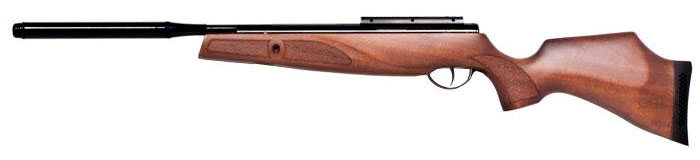
BSA Scorpion This is the perfect rifle for airgunners who prefer traditional, straightforward performance teamed with rock-solid build quality and no-nonsense design. The Scorpion’s single-shot, bolt-action format is simplicity itself to use and the rifle’s quick-fit charging system makes it just as easy to run. The Scorpion’s fully-floating, match-accurate barrel is set deeply into the breech block for total stability and comes ready-threaded to take a silencer. A generous pellet loading bay ensures fast, easy loading and the ergonomic ‘Bolas’ bolt-handle makes cocking virtually effortless. Affordable, practical, and built to last a lifetime, the Scorpion provides the performance while you get on with the shooting!

BSA Scorpion Rifle Overall Length 37" Barrel Length 18.5" Weight 7.8 lbs .177 Scorpion Rifle - 985 fps Beech Stock - $819.00


BSA Scorpion Rifle Overall Length 37" Barrel Length 18.5" Weight 7.8 lbs .22 Scorpion Rifle - 900 fps Beech Stock - $819.00


BSA Scorpion Rifle Overall Length 37" Barrel Length 18.5" Weight 7.8 lbs .177 Scorpion Rifle - 985 fps Walnut Stock - $969.00


BSA Scorpion Rifle Overall Length 37" Barrel Length 18.5" Weight 7.8 lbs .22 Scorpion Rifle - 900 fps Walnut Stock - $969.00


orce

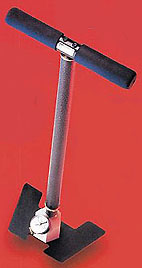
Logun Hand Pump: A convenient, portable, and affordable way to charge your Logun, FX, or any precharged pneumatic rifle. The pump comes with a pressure gauge, hose or DIN fitting, moisture trap, particulate filter with relaceable element, and bleed valve. Dependability and minimal user effort make this unit the best pump available. $299.00


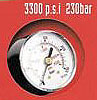
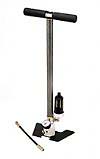
The Hill Pump is a top quality air rifle pump manufactured to ISO 9002 standards using the latest technology. Each pump is rigorously tested and backed by a twelve month warranty. Hill Pumps have been pump manufacturers since 1841. The Hill Pump comes standard with a 3300-psi (230 Bar) Gauge , precision-machined pressure chamber with Brass Fittings , heavy-duty connector Hose , Universal Adapter and a replaceable Micron Filter . The Micron Filter is a unique replaceable filter system that prevents contamination of your air rifle or pistol. The standard pump hose and connector works with FX, Falcon, Daystate and Air Arms rifles. The heavy duty construction and built-in replaceable filter is what sets the Hill pump apart. The Hill Pump with Dry Pac
The latest Patented design Hill Air Rifle Pump and Dry Air Flow System.
Approved by most leading Air Gun Manufacturers.
Dry Pac removes 90% of moisture
ISO 9001 Quality Assured
3300 psi (230 bar)
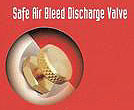
Unique Safety Bleed Valve
Rigorous Scientific Testing
Patented Pump and Dry Air Flow System
Pumps are 100% Tested
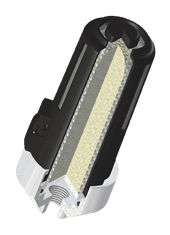
DRY-PAC Patented Dry Air Flow System

Concerned about moisture damaging your air weapon?... Not any more!

The Hill DRY-PAC moisture removal system is another new ground
breaking innovation from the manufacturers of the highly successful 2128
Series Air Compressor Pump. The Hill Dry-Pac System answers popular
concerns about moisture and hand pumps.

Unique to the market, the Hill Dry-Pac System is a patented method of
actively removing moisture utilizing a specially formulated sintered filters.
The Hill Dry-Pac has undergone lengthy and rigorous scientific testing under
laboratory conditions and will effectively remove up to 90% of the moisture
content prior to charging your PCP.
$319.00


BSA Pump with Dry-Pac Moisture Filter-Includes:

BSA Pump-Hose-BSA Fitting-Dry-Pac Filter-One Pack Filler for Dry Pac-Instructions

$319.00


Scuba Tank Adapter, Gauge & Hose $129.00


XS SCUBA ALUMINUM TANK 80CF

* FREE Visual Inspection Program (VIP) Included!
* Nitrox Ready up to 40% (the recreational limits of nitrox)
* Includes Pro Valve-Standard Yoke and DIN Compatible
* 3000 PSI
* Proprietary 6061-T6 alloy, a balanced aluminum-magnesium-silicon blend exclusive to Luxfer.
* 7.25 Inches in Diameter
* 26.1 Inches in Length
* Weight Empty = 31.7lbs
* Buoyancy Full = -1.9lbs
* Buoyancy Empty = 4lbs
* "Real Weight" = 35.7lbs
* COLORS:
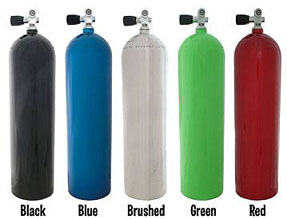
$249.00


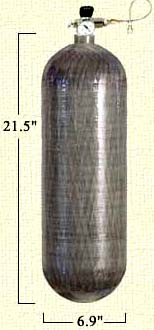
Carbon Fiber Air Tank Large Tank-
Displacement: 88 cu. ft. Dry Weight: 11.3 lbs. Working Pressure: 4500 psi.
Carbon fiber filament wound over aluminum bladder . Hose has an inline gauge quick-cisconnect adapter with 1/8" BSPP male threads on one end.
Large Tank Set includes:
1-DIN Adaptor
1-1/8 mBSP X 1/8mBSP
1-Seal Washer
1-Micro bore hose
1-Valve with built in bleed body and gauge?
(eliminating the use of a yoke)
1-1/4 oz. Silicon Lub.
1-Pressure Gauge
1-Large Tank
$695.00 with free shipping


To get Pellets Click Here


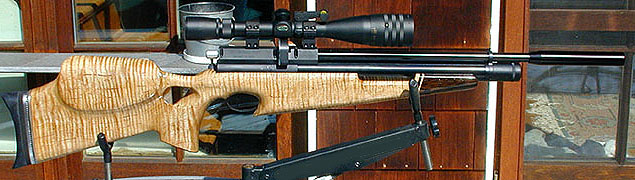
Air Arms 410 Curly Maple Custom

Air Gun Index click here

For Austin Halleck Inline & Mountain Rifles click here


sales@ctico.com

1-877-667-0026

Online, Mail In & Fax Orders Click Here.

GPS next

Knife Index next

Rifle Scopes next

Rocky Boots next

Muzzleloaders next

Auto Park 2000 next

Night Vision Optics next

Gun Vault & Riflelocker next

Auto & Personal Security next

Precision Air Rifles & Pistols next

Browning Outerwear & Scent-Lok next

Barnett, Horton & Ten Point Crossbows next

Binoculars, Rangefinders, Spotting Scopes & Imaging next


Legal Disclaimer


69 bsa molecular weight
69 bsa tank

r

r

bsa spitfire air rifles


BSA Spitfire Airgun


Truly a revolutionary air rifle. Outwardly, it resembles a standard break-barrel airgun, but the BSA Spitfire is in fact a precharged pneumatic air rifle, which contains its own reservoir of air in the cylinder. The break-barrel system makes it simplicity itself to use, while the precharged recoilless action produces superb accuracy. The system is self-regulating, thanks to a patented in-line valving mechanism, and features a handy indicator on the scope rail to tell the user when to refill. When necessary, the reservoir can be refilled by using a buddy bottle.

Specifications:

The above picture of the BSA Spitfire is shown with an optional BSA sight (3-9x32mm BSA zoom Deerhunter scope) If you require a scope add one to your cart and remember to add scope mounts. Additional BSA scopes


bsa515

The BSA Spitfire  will fire all our .22 pellets but we recommend Webley  Lazapoint or Lazapell for optimum performance.


bsa515

BSA air gun Precharge information

The BSA Spifire runs on its own internal air reservoir. This reservoir will provide power for many shots.

To recharge the gun in the field you need either a precharged Buddy bottle (200cc) or a special footpump. The footpump can also be used to recharge the Buddy bottle. Alternatively the BSA gun and Buddy bottle can be recharged by your local diving shop or you could buy a large air cylinder and refill from that. In the case of the BSA Spitfire you will get up to 200 shots from a 200cc Buddy bottle.


bsa515

knock down target pellet catcher


Knock down the four animal figures and then hit the centre disc to standthem back up. Catches pellets and avoids ricochets. 


bsa guns 184 bsa air guns 52 guns bsa 30 06 28 1948 1949 bsa guns 14 1948 1949 bsa ltd guns 9 bsa guns uk 9 bsa guns ltd 5 bsa guns couk 3 bsa guns limited 3 bsa guns winchester 270 3 bsa shot guns 3 bsa guns apprenticeship 2 bsa guns nz 2 guns bsa england 2 guns made by bsa for commonwealth of australia 2 bsa air guns old ones 1 bsa guns jobs 1 bsa guns ltd england 1 bsa guns usa 1 bsa pellet guns 1 bsa shoot guns 1guns bsa 1 guns made by bsa 1 pulling down bsa guns 1 review bsa shot guns 1 sales bsa guns bsa air rifles 122 bsa air rifles uk best deals 93 bsa air gun rifles 6 cheap bsa air rifles 6 air rifles bsa airsporter 4 bsa air rifles sa 3 bsa comet air rifles 3 bsa gun factory air rifles 3 bsa pump air rifles 3 .177 10 shot bsa air rifles 2 best uk air rifles deals bsa 2 bsa air rifles nz 2 bsa air rifles spain 2 old bsa gun factory air rifles 2 air rifles for bsa 1 bsa air rifles uk 1 bsa air rifles website 1 www bsa air rifles
69 bsa cycle


r

Birmingham Small Arms Company

From Wikipedia, the free encyclopedia

Jump to: navigation, search

The Birmingham Small Arms Company (BSA) was a British manufacturer of vehicles, firearms, and military equipment, and still exists as an airgun sport manufacturer and distributor.

At its peak, BSA was the largest motorcycle producer in the world. Loss of sales and poor investments in new products in the motorcycle division, which included Triumph Motorcycles, led to problems for the whole group.

[edit] History

BSA was founded in 1861 in the Gun Quarter, Birmingham, England by fourteen gunsmiths of the Birmingham Small Arms Trade Association, who had together supplied arms to the British government during the Crimean War. The company branched out as the gun trade declined; in the 1870s they manufactured the Otto Dicycle, in the 1880s the company began to manufacture bicycles and in 1903 the company's first experimental motorcycle was constructed. Their first prototype automobile was produced in 1907 and the next year the company sold 150 automobiles. By 1909 they were offering a number of motorcycles for sale and in 1910 BSA purchased the British Daimler Company for its automobile engines.

[edit] World War One

During World War I, the company returned to arms manufacture and greatly expanded its operations. BSA produced rifles, Lewis guns, shells, motorcycles and other vehicles for the war effort.

[edit] Inter-War years

1935 magazine advert for the BSA range of motorcycles and 3-wheeler cars

In 1920, it bought some of the assets of the Aircraft Manufacturing Company (Airco), which had built many important aircraft during the war but had become bankrupt due to the falloff in orders once hostilities ceased. BSA did not go into aviation; the chief designer Geoffrey de Havilland of Airco founded the de Havilland company.

As well as the Daimler car range, BSA re-entered the car market under their own name in 1921 with a V-twin engined light car followed by four-cylinder models up to 1926 when the name was temporarily dropped. In 1929 a new range of 3 and 4 wheel cars appeared and production of these continued until 1936.

In the 1930s the board of directors authorised expenditure on bringing their arms-making equipment back to use - it had been stored at company expense since the end of the Great War in the belief that BSA might again be called upon to perform its patriotic duty.

In 1931 the Lanchester Motor Company was acquired and production of their cars transferred to Daimler's Coventry works.

[edit] World War Two

By World War II, BSA had 67 factories and was well positioned to meet the demand for guns and ammunition. BSA operations were also dispersed to other companies under licence. During the war it produced over a million Lee-Enfield rifles, Sten sub machine guns and half a million Browning machine guns. Wartime demands included motorcycle production. BSA supplied 126,000 M20 motorcycles to the armed forces, from 1937 (and later until 1950) plus military bicycles including the folding paratrooper bicycle. At the same time, the Daimler concern was producing armoured cars.

[edit] Post war

Sir Bernard Docker headed BSA until 1951, after which Jack Sangster became Managing Director. Post-war, BSA continued to expand the range of metal goods it produced. The BSA Group bought Triumph Motorcycles in 1951, making them the largest producer of motorcycles in the world. The cycle and motor cycle interests of Ariel, Sunbeam and New Hudson were also acquired. Most of these had belonged to Sangster.

In 1960 Daimler was sold off to Jaguar.

The BSA bicycle arm was sold off to Raleigh in 1957. Bicycles under the BSA name are currently manufactured and distributed within India by TI Cycles of India.

The production of guns bearing the BSA name continued beyond the 1957 sale of the bicycle division, but in 1986 BSA Guns was liquidated, the assets bought and renamed BSA Guns (UK) Ltd. The company continues to make air rifles and shotguns, and are still based in Small Heath in Birmingham.

[edit] Norton-Villiers-Triumph

The Group continued to expand and acquire throughout the 1950s but by 1965 competition from Japan (in the shape of companies like Honda) and Germany was eroding BSA's market share. The BSA (and Triumph range) were no longer aligned with the markets; mopeds were displacing scooter sales, superbikes were up at 1000cc and the trials and scrambles areas were now the preserve of two-strokes. Some poor marketing decisions and expensive projects contributed to substantial losses. For example, the development and production investment of the Ariel 3, an ultrastable 3 wheel scooter, was not recouped by sales; the loss has been estimated at some 2 million pounds.

Reorganisation in 1971 concentrated motorcycle production at Meriden, Triumph's site, with production of components and engines at BSA's Small Heath. At the same time there were redundancies and the selling of assets. Barclays Bank arranged financial backing to the tune of 10 million.

By 1972, BSA was so moribund that with bankruptcy imminent, and with government backing its motorcycle businesses were absorbed into the Manganese Bronze company, Norton-Villiers, which became Norton-Villiers-Triumph with the intention of producing and marketing Norton and Triumph motorcycles. The shareholders of BSA confirmed the deal. Although the BSA name was left out of the new company's name, a few products continued to be made carrying it until 1973. The final range was just four models: Gold Star 500, 650 Thunderbolt/Lightning and the 750cc Rocket Three.

However, the plan involved the axing of some brands, large redundancies and consolidation of production at two sites. This scheme to rescue and combine Norton, BSA and Triumph failed in the face of worker resistance. Norton's and BSA's factories were eventually shut down, while Triumph staggered on to fail four years later.

Out of the ashes of receivership, the NVT Motorcycles Ltd company which owned the rights to the BSA marque, was bought-out by the management and renamed the BSA Company.

The BSA bicycle arm had been sold to Raleigh in 1956 and the BSA Winged-B logo was still seen for a while on up-market bicycles.

[edit] Limited revival

The BSA company produced military motorcycles (with Rotax engines) and motorcycles for developing countries (with Yamaha engines) under the BSA name. In the later case the old "Bushman" name was recalled to duty - it had been previously used on high ground clearance Bantams sold for the likes of Australian sheep farmers.

In 1991, the BSA (motorcycle) Company merged with Andover Norton International Ltd., to form a new BSA Group, largely producing spare parts for existing motorcycles. In December 1994, BSA Group was taken over by a newly formed BSA Regal Group. The new company, based in Southampton, has a large spares business and has produced a number of limited-edition, retro-styled motorcycles.

[edit] Products

[edit] Bicycles

Bicycle manufacture was what led BSA into motorcycles. The subsidiary business BSA Bicycles Ltd was sold to Raleigh Industries in 1956.

[edit] Motorcycles


The first wholly BSA motorcycles were built in 1910, before then engines had come from other manufacturers. BSA Motorcycles Ltd was set up as a subsidiary in 1919.

BSA motorcycles were sold as affordable motorcycles with reasonable performance for the average user. BSA stressed the reliability of their machines, the availability of spares and dealer support. The motorcycles were a mixture of sidevalve and OHV engines offering different performance for different roles, e.g. hauling a sidecar. The bulk of use would be for commuting. BSA motorcycles were also popular with "fleet buyers" in Britain, who (for example) used the Bantams for telegram delivery for the Post Office or motorcycle/sidecar combinations for AA patrols Automobile Association (AA) breakdown help services. This mass market appeal meant they could claim "one in four is a BSA" on advertising.

Machines with better specifications were available for those who wanted more performance or for competition work.

Initially, after World War II, BSA motorcycles were not generally seen as racing machines, compared to the likes of Norton. In the immediate post war period few were entered in races such as the TT races, though this changed dramatically in the Junior Clubman event (smaller engine motorcycles racing over some 3 or 4 laps around one of the Isle of Man courses). In 1947 there were but a couple of BSA mounted riders, but by 1952 BSA were in the majority and in 1956 the makeup was 53 BSA, 1 Norton and 1 Velocette.

To improve US sales, in 1954, for example, BSA entered a team of riders in the 200 mile Daytona beach race with a mixture of single cylinder Gold Stars and twin cylinder Shooting Stars assembled by Roland Pike. The BSA team riders amazingly took first, second, third, fourth, and fifth places with two more riders finishing at 8th and 16th. This was the first case of a one brand sweep.[1]

The BSA factory experienced success in the sport of motocross with Jeff Smith riding a B40 to capture the 1964 and 1965 FIM 500cc Motocross World Championships. It would be the last year the title would be won by a four-stroke machine until the mid-1990s.

[edit] Motorcycle models

[edit] Pre World War II

  • G14 1000cc V-twin
  • Empire Star
  • Blue Star
  • Silver Star
  • Gold Star
  • Sloper
  • M20
as the WD M20 the motorcycle of the British Army in WW2

[edit] Post World War II

1957 BSA Golden Flash 650

  • A series Twins (four-stroke, parallel twin)
    • A7
      • A7 Shooting Star
    • A10
      • A10 Golden Flash
      • A10 Road Rocket
      • A10 Super Rocket
      • A10 Super Flash
      • A10 Rocket Gold Star
    • A50
      • A50R Royal Star
      • A50C Cyclone
      • A50W Wasp
    • A65
      • A65 Star Twin
      • A65L Lightning
      • A65R Rocket
      • A65T Thunderbolt
      • A65H Hornet
      • A65S Spitfire
      • A65F Firebird Scrambler
    • A70L Lightning 750
  • Triples - the BSA Rocket 3/Triumph Trident were co-developed, and resultantly the Rocket3 shares some engine components and cycle parts with the Triumph Trident (see Triumph Motorcycles), but has BSA "slanted" engine cases, and BSA frame and tinware.
    • A75R Rocket3 750
    • A75RV Rocket3 750 - 5 speed
    • A75V Rocket3 750 - 5 speed
  • B series (4 stroke single cylinder)
    • B25 Fleet Star
    • B25 Starfire
    • B25 Barracuda
    • B25 SS Gold Star
    • B31
    • B32 Gold Star
    • B33
    • B34 Gold Star
    • B40 350 Star
    • B40 SS90
    • B44 Victor
    • B44
      • B44SS Shooting Star
      • B44VS Victor Special
    • B50
      • B50SS Gold Star 500
      • B50T Victor Trials
      • B50MX Motocross
  • C series (Four-stroke unit singles).
    • C10
    • C11/C11G: 12hp - 70mph - 85mpg - weight 250lbs.

The C11 used a C10 motor fitted with OHV top end. The frame on the C11 was almost unchanged until 1951 when BSA fitted a plunger rear end making only a little improvement to the quality of the ride. Early gearboxes were weak and were know to explode. The C11G was available as a 3 speed with rigid frame or 4 speed with the plunger frame version. Both models had better front brakes than earlier models. This model was a popular all round commuter motorcycle, and many can still be seen around today.

(1956 - 1958). 249cc OHV
  • C15 Star
  • C15T Trials
  • C15S Scrambler
  • C15SS80 Sports Star 80
  • C15 Sportsman
  • D series (Two-stroke single cylinder. See BSA Bantam for details)
    • D1
    • D3
    • D5
    • D7
    • D10
    • D13
    • D14/4
    • B175
  • Others (may include some export versions of models listed above)
    • BSA Barracuda
    • BSA Beagle
    • BSA Brigand - late 70s moto-cross style product by NVT with imported 50 cc 2 stroke engine.
    • BSA Dandy 70
    • BSA Sunbeam (Scooters, also produced as Triumph TS1, TW2 Tigress)
      • 175B1
      • 250B2
    • BSA Starfire
    • BSA Rocket Scrambler
    • BSA Rocket Gold Star
    • BSA Fury
    • BSA Hornet
    • Winged Wheel (auxiliary power unit for bicycles)
    • T65 Thunderbolt (essentially a Triumph TR6P with BSA Badges)

    [edit] Cars

    Car timeline

    • 1907 to 1914 various forms with capacities ranging from 2.5 to 4.2 litre. The larger cars were based on the 1907 Peking-Paris Itala.
    • 1910 BSA purchased the Daimler Company who took over car manufacture.
    • 1911 BSA car with Daimler engine.
    • 1912 Car production transferred to Coventry, BSA cars became rebadged Daimlers.
    • 1914 War stopped car production
    • 1921 BSA car production resumed with rear-wheel-drive air-cooled V-twin light car.
    • 1929 First BSA three-wheeler
    • 1931 TW-5 van version of the three-wheeler
    • 1931 BSA acquired Lanchester.
    • 1932 T-9 open four seat four-wheeler with a water-cooled four cylinder 9 hp (6.7 kW) engine (1075 cc).
    • 1932 V-9 Van version also produced.
    • 1932 Another BSA Rear-wheel-drive fluid flywheel 10 hp (7.5 kW) car, sold alongside the T9.
    • 1932 FW32 Four wheeled version of the 3-wheeler produced for 1 year
    • 1933 T-9 and V-9 production ceased
    • 1933 Four-cylinder engine version of the three and four-wheeled car was added to the range.
    • 1935 First Scout Series 2/3
    • 1936 to 1937 Scout Series 4
    • 1936 Three wheeled cars dropped
    • 1937 to 1938 Scout Series 5
    • 1938 to 1939 Scout Series 6
    • 1940 WWII stopped production of BSA cars
    • 1960 Jaguar Cars Ltd. acquired The Daimler Co. Ltd. and its subsidiaries from the BSA group.

    [edit] Military vehicles

    • BSA Scout armoured car.
    • "Type G Apparatus", Folding paratrooper bicycle, 32½ lb (15 kg) with parachute.

    [edit] Military equipment

    [edit] Air Rifles

    [edit] Air Pistols

    [edit] See also

    [edit] External links